
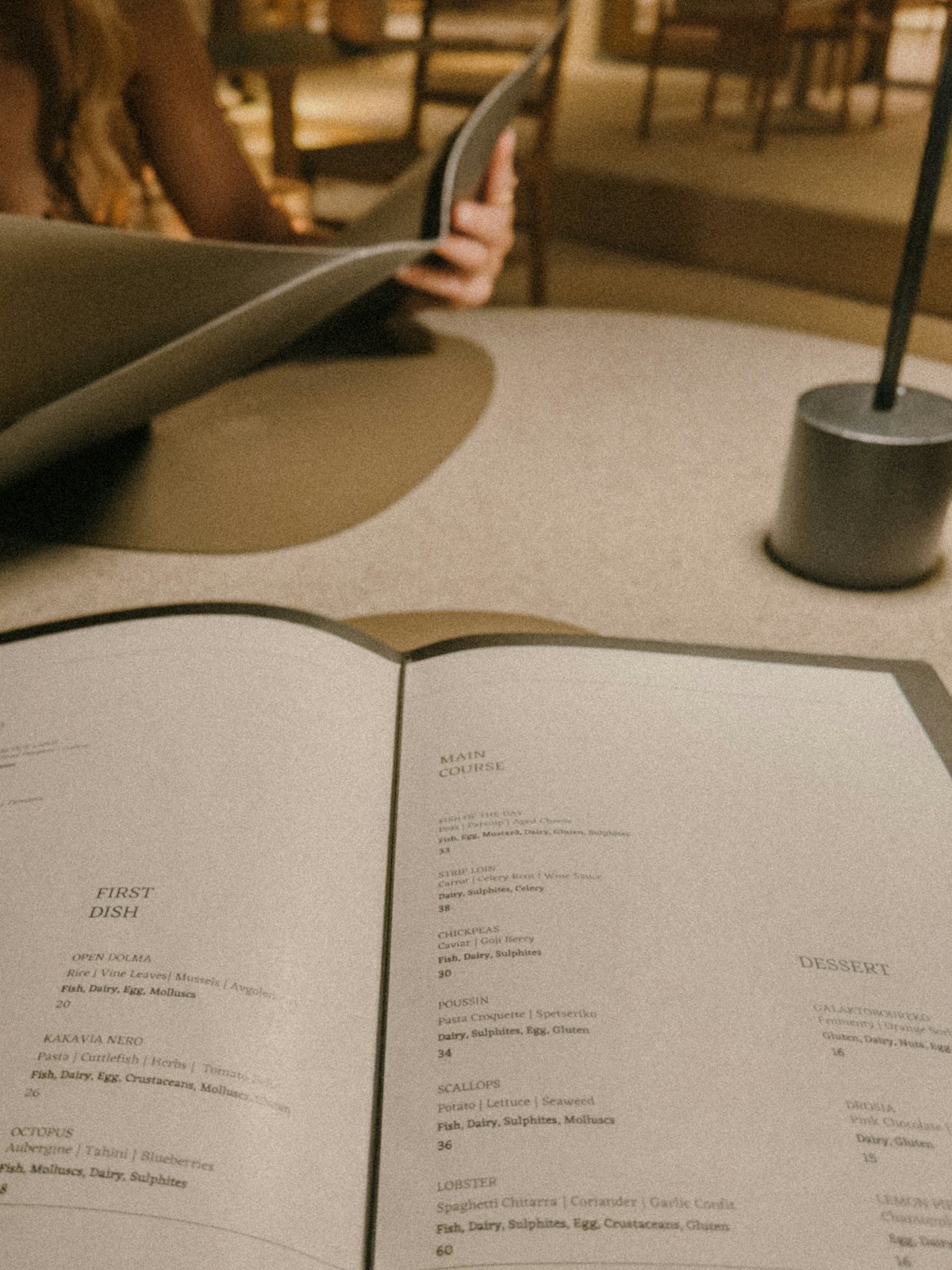
 Photo by Kieran Child on Unsplash
Two friends are looking at a restaurant menu. One says, "I'll have the chicken" — deciding right there, on the spot. The other says, "I'm going to have the salmon" — because they'd already decided before they even sat down. Same future action, same meal, two different grammar forms doing two genuinely different jobs. "They basically mean the same thing" is the single most common oversimplification taught about this pair, and it's exactly what causes learners to mix them up in the moments where the difference actually matters.
The quick comparison
| Will | Going To | |
|---|---|---|
| Structure | will + verb | am/is/are + going to + verb |
| Used for | spontaneous decisions, promises, offers, opinion-based predictions | plans decided before now, predictions based on present evidence |
| Example | I**'ll** get it! | I**'m going to** call her later. |
| Typical signal | deciding right now | something already arranged, or visible proof |
| Negative | I won't go. | I**'m not going to** go. |
When to use will
- A spontaneous decision made at the moment of speaking. The phone's ringing — I'll get it.
- A promise. I'll call you tomorrow, I promise.
- An offer. You look tired — I'll make you a coffee.
- A prediction based on opinion or belief, with no specific evidence in front of you. I think she'll pass the exam.
- A request. Will you help me carry this?
When to use going to
- A plan or intention decided before this moment — even a few seconds before. I'm going to study medicine (already decided, maybe a while ago).
- A prediction based on something visible, happening right now. Look at those clouds — it's going to rain.
 Photo by Bing Hui Yau on Unsplash
The rule that resolves most cases
Ask two separate questions. For decisions: is this being decided right now, or was it already decided before this moment? Right now → will. Already decided → going to. For predictions: is there visible evidence in front of me, or is this just an opinion? Opinion, no specific proof → will. Visible evidence → going to. The restaurant menu captures the decision side perfectly — "I'll have the chicken" only works if you're choosing in that instant, not if you'd already picked it on the way to the restaurant. The storm clouds capture the prediction side — once you can actually see the evidence, "going to" is the natural choice, and plain "will" starts to sound slightly detached from what's right in front of you.
Common mistakes
- Using will for a plan that was already made.
I will study medicine(said about a decision made months ago) sounds like you're deciding in that exact instant → I'm going to study medicine. - Using will for a prediction with obvious evidence right there.
Look at that car, it will crash→ with visible danger happening right now, it's going to crash is the natural choice. - Dropping am/is/are before "going to."
I going to call her→ I'm going to call her.
Other ways to talk about the future
Will and going to are not the only options. Native speakers use several other forms every day, and each one has a slightly different feeling.
| Form | Typical use | Example |
|---|---|---|
| present continuous | fixed arrangements, often with a time | I'm meeting Anna at 6 tonight. |
| present simple | timetables and schedules | The train leaves at 9:15. |
| will | decisions made now, predictions, promises | I'll call you later. |
| going to | plans and evidence-based predictions | It's going to rain: look at those clouds. |
| will be -ing | an action in progress at a future time | This time tomorrow I'll be flying to Rome. |
For arrangements you have already made with other people, the present continuous often sounds more natural than going to: We're having dinner with my parents on Saturday suggests a plan that is confirmed.
Will in different situations
Will is the most flexible of the future forms. It is used for:
- Instant decisions: The phone is ringing. I'll get it.
- Offers and promises: Don't worry, I'll help you move on Sunday.
- Predictions based on opinion: I think she'll be a great teacher.
- Requests and refusals: Will you open the window? He won't listen to me.
A few examples to compare
Look at how a small change of verb form changes the message:
- I'll study tonight. (a decision I have just made, perhaps in reply to a question)
- I'm going to study tonight. (I already planned this)
- I'm studying tonight. (an arranged time, maybe with a study group)
All three are grammatically correct. The difference is how settled the plan feels and how the speaker wants to present it.
Tips for choosing quickly in conversation
When you are speaking, you do not have time to analyse every sentence. Use this short check: if you decided just now, use will. If you can see evidence now, or the plan existed before you started speaking, use going to. If another person is expecting you at a specific time, the present continuous is usually the best choice. With a little practice, this becomes automatic.
Practice it
Both forms sit inside the same quiz topic, since they're both part of how English expresses the future — this is also where you'll see present continuous's future use (covered in Present Simple vs Present Continuous) sitting alongside them as a third option for fixed arrangements. It's one of the twelve tenses in the full tenses chart, and the same "two forms, same moment, different emphasis" pattern shows up again in Past Perfect Continuous vs Past Perfect.
Häufig gestellte Fragen
Weiterlesen
Sequence of Tenses: So bleiben die Zeitformen in einer Geschichte konsistent
Warum Geschichten ungewollt zwischen Zeitformen springen und wie man das behebt: die Zeitstrahl-Anker-Methode, Backshift in der indirekten Rede, Zeitsätze und die fünf häufigsten Konsistenzfehler.
Future Perfect Continuous: Die seltenste Zeitform einfach erklärt
Das Future Perfect Continuous (will have been + verb-ing) erklärt mit Beispielen zu Meilensteinen, einem klaren Vergleich mit dem Future Perfect und den häufigsten Lernerfehlern.
Stative Verbs: Warum man nicht „I Am Knowing“ sagt (und die Ausnahmen)
Der Ampel-Leitfaden zu Stative Verbs: welche nie auf -ing enden, welche ihre Bedeutung ändern und wann Muttersprachler die Regel absichtlich brechen.
Wende es an
Über Englisch zu lesen ist ein guter Anfang — es zu üben ist das, was wirklich hängen bleibt.
Kostenloses Quiz ausprobieren